 Early Intervention Series: Family-Centered Practices (2025)
Family-Centered Practices in Early Intervention
This course equips early intervention providers with the latest research and practical strategies for implementing capacity-building, family-centered practices. You’ll explore the vital role of families in the early intervention process and learn how to apply relational and participatory approaches that actively engage families and strengthen child and family outcomes.
The course is grounded in professional standards, current research, and wisdom from the field, ensuring that what you learn aligns with best practices across the field.
Course Details
-
For best results, use Chrome as your browser.
-
A pre-test must be completed to access the course.
-
To earn credit, you must achieve a score of 80% or higher on the post-test.
-
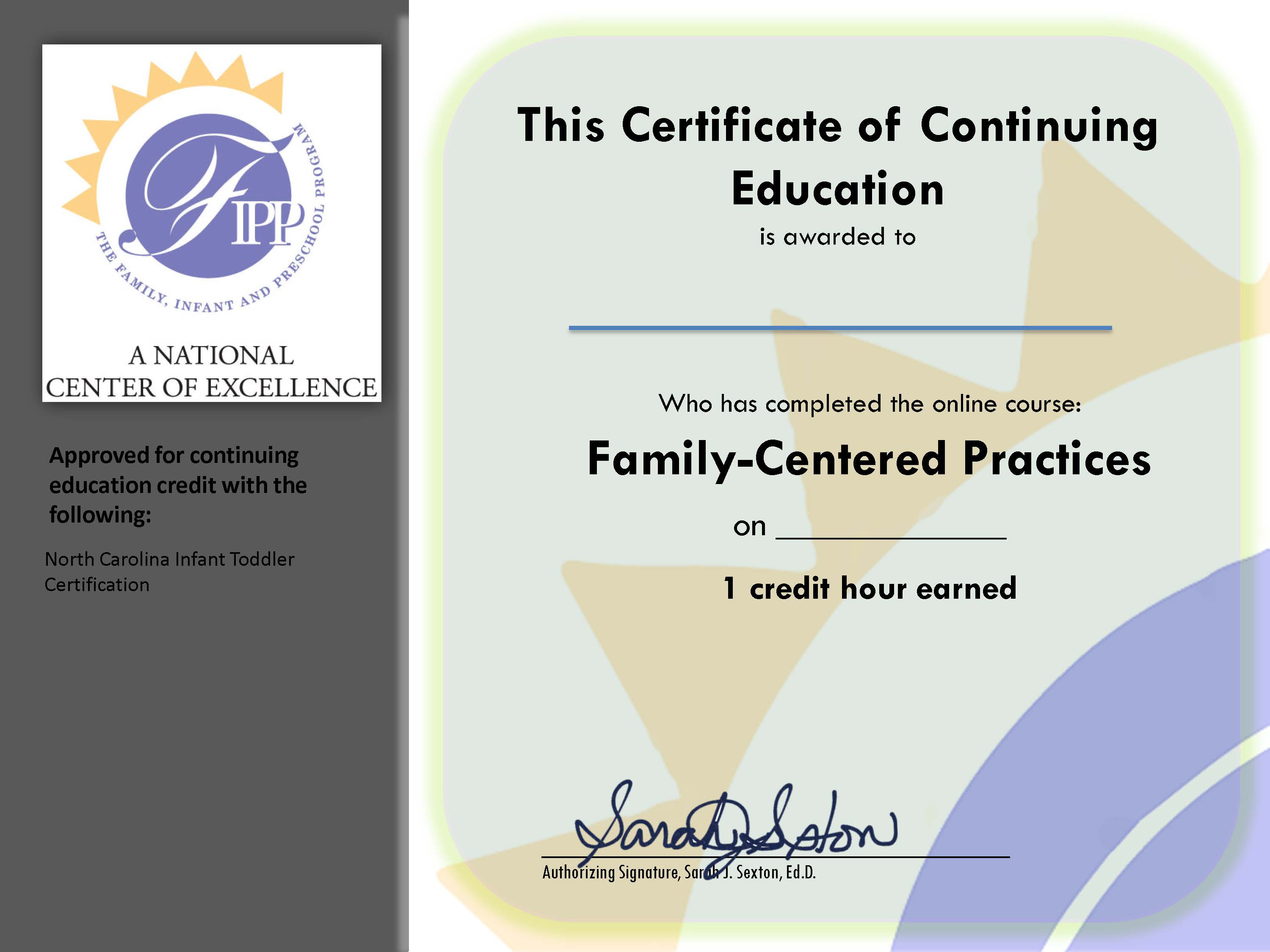
A certificate of completion will be available after all requirements are met.
If you encounter technical issues, please contact: FIPP.CASELMS@dhhs.nc.gov
To cite this resource use:
Sexton, S., & Clark, K. (2025). Early intervention series: Family-centered practices [Online course]. LearnPoint LMS. https://fippcase.learnpointlms.com/ (Note: Course access requires login.)
Lessons
| Name | View Schedule |
|---|---|
 1. Early Intervention Series Family Centered Practices Pre-test 1. Early Intervention Series Family Centered Practices Pre-test
|
- |
|
2. Early Intervention Series: Family Centered Practices Overview and Misconceptions
|
- |
|
3. Early Intervention Series: Family Centered Practices Scenarios and Course Summary
|
- |
|
4. Early Intervention Series: Family Centered Practices Post Test
|
- |
Objectives
By the end of this course, participants will:
- Understand the characteristics of family-centered practices.
- Recognize and describe the benefits of relational help-giving strategies.
- Recognize and describe the benefits of participatory help-giving strategies.
- Describe how the use of family-centered practices promotes research-based practices.

EI Series: Family-Centered Practices